
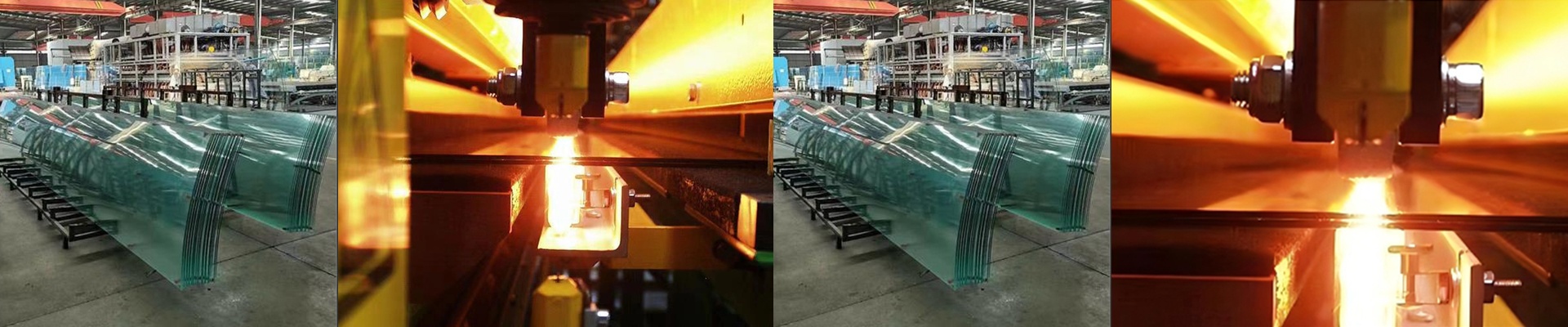

Cutting through ultra-thick glass is a brutal process. If you’re just running a cold cut, your cutting wheel is basically fighting a war against the glass. The friction is intense, the mechanical stress is off the charts, and your tools burn out way faster than they should. It’s a waste of money and a headache. To fix this, we use shortwave infrared lamps to hit the cutting path directly. Here is how it actually works: most heaters just warm up the surface, but shortwave IR sinks deep into the glass. It gets the molecules vibrating right along the score line, warming the material just enough to soften it. Suddenly, the diamond wheel isn’t fighting raw, cold glass anymore. It just glides. You get a much cleaner break, and your tools last significantly longer because they aren’t taking a beating every single pass. But you can’t just use any old heater. Convection or longwave heaters won’t cut it—the heat just vanishes before it hits the depth you need. You need high wattage density. We use lamps that concentrate energy into a narrow strip, acting more like a precision tool than a space heater. Now, there is a catch. These lamps put out a ton of heat. While they’re great for the glass, they can wreak havoc on your machine frame if you aren’t careful. You’ve got to get your cooling fans and shielding right. If your airflow is weak, you’ll end up warping your housings or frying your electronics. One last tip: wire these into a fast-response PID controller. You want the heating to sync perfectly with the speed of the cutting head. That way, the glass is soft the exact moment the wheel hits the surface. No overheating, no under-softening—just a smooth cut.