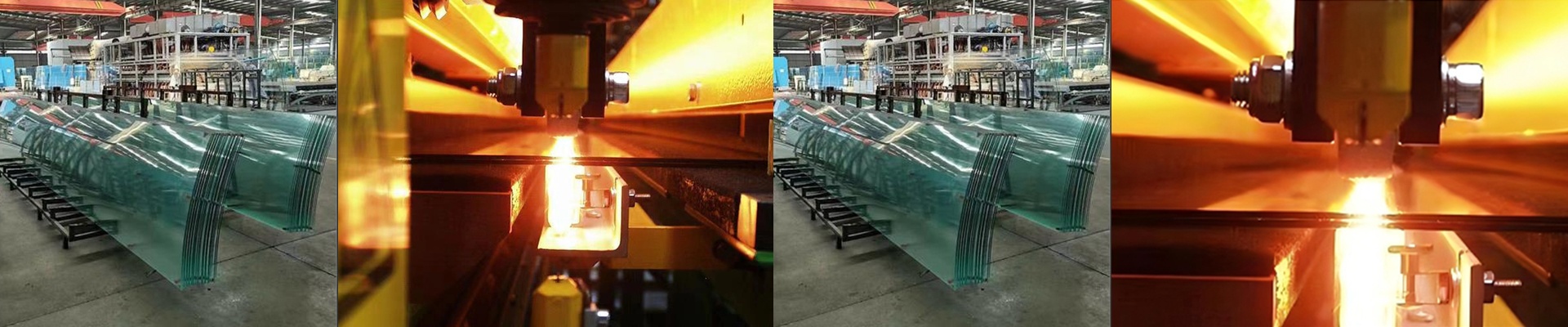
Out on the line, one hot spot on an ampoule doesn’t just kill a single part. It drags yield down, triggers rework, and forces the crew to hunt thermal stress fractures that only show up hours later. When the heat field is uneven, you get splits, thin-wall warp, and optical distortion that fails inspection. The fix starts with the heater. We built the medical glass ampoule heater around one idea: get the thermal field even. That’s the difference between a run that behaves and one that fights you every shift.
What actually matters under the hood
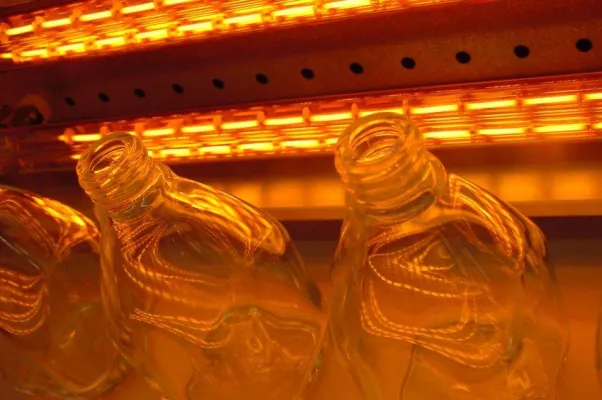
The core choice is short-wave IR with high-emissivity quartz elements. Short-wave penetrates fast and couples cleanly into glass, so the surface and subsurface heat together. That knocks down the steep thermal gradients that drive cracking. Quartz also runs clean, holds its dimensions, and handles rapid thermal cycling without beating up the element. The heater is laid out to deliver even power across the whole active face. We control element spacing, density, and reflector geometry so the hot zone stays uniform, not splotchy. The payoff is a thermal profile you can count on, shift after shift. For plant integration and process control, the specs are practical:
- Power: sized for ampoule forming and preheating, typically 1–3 kW per module, scalable to match line speed.
- Voltage: 230 V or 400 V three-phase, depending on the station layout.
- Heating area: matched to standard ampoule diameters and lengths, with custom faces for non-standard formats.
- Response time: fast ramp to setpoint, so you can keep cycle times short without overheating.
- Mounting: compact footprint with standard brackets and terminal blocks for drop-in replacement. Tight, repeatable temperature control across the heated zone keeps glass stress low.
Why this approach fits ampoule production
Ampoule lines move fast, and the glass sees rapid temperature swings. If the heat is uneven, wall thickness varies, and the part fights the tooling. You end up with splits at the shoulder, ovality, and wavy optical zones that fail QA. People start chasing gas pressure, timing, and tool alignment when the real culprit is the thermal field. Our ampoule heater gives you uniform heating across the blank and the neck. That reduces thermal stress, so the glass flows predictably. The results show up where it counts:
- Fewer fractures: Even heating lowers localized stress, cutting spontaneous cracks during forming and annealing.
- Tighter geometry: Uniform wall development improves concentricity and thickness consistency.
- Less optical distortion: Controlled heating preserves surface quality and clarity, which matters for medical inspection.
- Higher throughput: Fast ramp to setpoint supports short cycle times without sacrificing stability.
- Lower energy use: Short-wave IR heats on demand, with minimal standby loss compared to convection-heavy setups. On the floor, that means fewer scrap buckets, fewer line stops, and a process that stays on spec without constant fiddling.
What you need to watch on install and maintenance
Installation is straightforward, but alignment is non-negotiable. The heater face has to be parallel to the glass path, and the distance to the glass must be consistent across the zone. Even a few millimeters off can throw a shadow into the thermal field. The heater is built for industrial duty, but it’s sensitive to contamination. Keep the quartz elements and reflectors clean. Steam, solvents, and particulate can dull surfaces and shift emissivity, and that shows up as uneven heating. Build a scheduled cleaning plan, and inspect the face during preventive maintenance. If you’re swapping out an existing module, confirm the mounting footprint and lead routing. Some lines have tight clearances, and terminal orientation matters. We provide dimensions and clearance drawings up front so the replacement fits without modifying guards or fixtures. One practical trade-off: short-wave IR gives you speed and uniformity, but it needs solid temperature control. Use a stable controller with an appropriate sensor in the active zone, and set ramp and soak to match how the glass transitions. Get those settings right, and the heater runs steady, the glass behaves, and the line keeps moving. If your goal is consistent ampoule quality at production speed, start with the heat field. Make it even. The rest of the process falls into place.